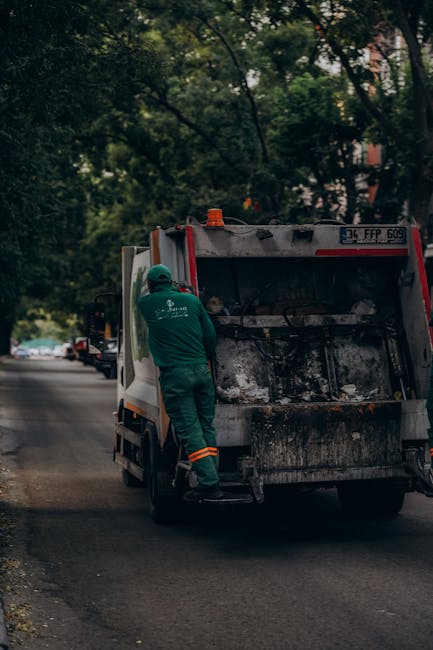
Best Rubbish Clearance Services in Purley High Street (CR8)
If you are searching for the best rubbish clearance services in Purley High Street (CR8), you are probably after one thing: a fast, reliable way to get unwanted items gone without stress, mess, or a weekend lost to lifting bags in and out of the car. That might mean a one-off house declutter, a full flat clearance, bulky furniture removal, garden waste, or builders' debris after a renovation. Whatever the job looks like, the right service should save time, protect your property, and handle waste responsibly.
This guide explains how rubbish clearance works in practice, what to look for in a good local provider, and how to choose a service that fits your situation. You will also find a comparison table, a practical checklist, common mistakes to avoid, and answers to the questions people usually ask before booking. If you want a clearer view of the wider service landscape, it can help to browse related pages such as waste removal in Purley, furniture clearance, and house clearance to match the type of job you need done.
Quick takeaway: the best clearance service is not always the cheapest or the biggest. It is the one that turns up when promised, removes the right waste, communicates clearly, and disposes of it properly.
Table of Contents
- Why Best Rubbish Clearance Services in Purley High Street (CR8) Matters
- How Best Rubbish Clearance Services in Purley High Street (CR8) Works
- Key Benefits and Practical Advantages
- Who This Is For and When It Makes Sense
- Step-by-Step Guidance
- Expert Tips for Better Results
- Common Mistakes to Avoid
- Tools, Resources and Recommendations
- Law, Compliance, Standards, or Best Practice
- Options, Methods, or Comparison Table
- Case Study or Real-World Example
- Practical Checklist
- Conclusion
- Frequently Asked Questions
Why Best Rubbish Clearance Services in Purley High Street (CR8) Matters
Rubbish piles up quickly. One skipped trip to the tip becomes a corner of the spare room, then a garage, then a whole area you stop noticing. In a busy local setting like Purley High Street, that can become more than just an inconvenience. Oversized waste takes up parking space, creates safety hazards, and can make homes, flats, and business premises feel harder to use.
Choosing a proper clearance service matters because rubbish is not just "stuff to throw away." Different items need different handling. Mattresses, broken desks, old wardrobes, renovation rubble, green waste, and mixed household junk all have their own handling requirements. Good providers separate reusable, recyclable, and residual waste where possible, which supports recycling and sustainability rather than simply sending everything to landfill.
There is also a practical side most people only appreciate once they have tried doing it themselves. Loading heavy items into a vehicle, making multiple runs, and finding the right facility can take far longer than expected. If you have limited time, no van, or stairs involved, the job becomes awkward very quickly. Truth be told, a well-run clearance can feel like taking a mental weight off as much as a physical one.
For landlords, letting agents, shop owners, and local businesses, speed matters too. A cleared space can be re-let, refurbished, or reused sooner. That is why many customers look beyond simple waste collection and compare services such as business waste removal and office clearance when they need dependable, scheduled help.
How Best Rubbish Clearance Services in Purley High Street (CR8) Works
Although every company has its own process, a professional rubbish clearance service usually follows a straightforward flow. The best providers keep things simple, explain what they can and cannot take, and give you a clear price or estimate before any work begins.
- You describe the waste. This may be a few bags, a single bulky item, or a full property clearance. Photos help, especially if access is tight or the load is mixed.
- The provider assesses the job. They consider volume, item type, labour, access, and disposal requirements. A loft with narrow stairs is very different from a front-drive garage load.
- You receive a quote or estimate. Good quotes are transparent about what is included, such as labour, loading, transport, and disposal fees.
- The team arrives and removes the waste. A professional crew should work methodically, protect floors where needed, and leave the area swept or tidied.
- The waste is sorted and processed. Reusable items may be diverted for reuse; recyclable materials should be separated where practical; remaining waste is handled through approved channels.
For larger jobs, it can help to choose a specialist rather than a general "man and van" arrangement. For example, builders' waste clearance is often the right fit for renovation debris, whereas garden clearance is better for green waste, soil, branches, and outdoor clutter. Matching the service to the waste type usually means better value and fewer surprises.
In some cases, you may need a more tailored property-clearance approach. A full home, rental flat, or inherited property is rarely just a rubbish job; it is usually a mix of furniture, small items, textiles, white goods, and general household waste. That is where home clearance, flat clearance, or loft clearance can be much more efficient than a one-off haulaway.
Key Benefits and Practical Advantages
The strongest reason to use a professional clearance service is simple: it makes a difficult job manageable. But the benefits go beyond convenience.
- Time saved: one organised visit is usually far faster than multiple DIY trips.
- Less physical strain: lifting sofas, cabinets, broken appliances, or builders' rubble is hard work and can be risky.
- Cleaner finish: the right crew will not just take items away; they will help restore order to the space.
- Better sorting: reusable or recyclable items are more likely to be handled properly when the service is set up for that purpose.
- Reduced disruption: that matters in flats, terraces, shops, and shared buildings where access is limited.
- Clearer next step: once the clutter is gone, redecorating, repairing, or listing the property becomes much easier.
There is also a trust benefit that often gets overlooked. When a service clearly explains its process, policies, and safety approach, it becomes easier to book with confidence. Pages such as health and safety policy, insurance and safety, and payment and security are useful signals that the company takes the work seriously.
Practical advantage in one sentence: a good rubbish clearance service turns a chaotic pile into a clear room without adding stress to your day.
Who This Is For and When It Makes Sense
This service is not only for people doing a dramatic clear-out. In reality, the need is often smaller and more ordinary. A few broken chairs in the hallway, a shed full of forgotten items, or packaging left over after a new sofa delivery can be enough to justify a booking.
The service makes sense if you are:
- moving home and need to reduce what goes with you
- clearing an empty property before sale or let
- renovating and need builders' debris removed
- emptying a garage, loft, or spare room that has become storage by accident
- replacing old furniture and want the old pieces removed responsibly
- running a business and need office or commercial waste removed with minimal interruption
It also suits people who simply do not want to spend a Saturday sorting, loading, and waiting in a queue at the tip. Let's face it, most people have better things to do than wrestle a wardrobe out of a narrow staircase.
If your project is more specialised, choose the matching service. For example, furniture disposal works well for single items and mixed bulky pieces, while furniture clearance is better when you have several items to remove together. A large outbuilding or neglected storage area may be better handled through garage clearance.
Step-by-Step Guidance
If you want the smoothest possible experience, treat the clearance as a small project rather than a last-minute errand. A bit of preparation goes a long way.
- Identify what needs to go. Separate rubbish, reusable items, furniture, and anything that may need special handling.
- Check access. Measure doorways, stairs, and lifts if the property is awkward. Mention parking restrictions or time limits early.
- Take photos. Clear images help the provider give a more accurate quote and avoid miscommunication.
- Ask what is included. Confirm loading, labour, transport, disposal, and any extra charges before booking.
- Keep valuables and documents out of the way. Clearance teams can only work efficiently if important items are already separated.
- On the day, make the route easy. Move cars if needed, unlock gates, and point out anything fragile.
- Do a final sweep. Once the waste is gone, check cupboards, loft corners, and behind doors for anything you intended to keep.
For property-wide clearances, the best results usually come from using the right service type from the start. A house clearance or flat clearance is not the same as general waste removal, even if some of the items overlap. The more accurate the brief, the smoother the job.
If you are comparing services, it can help to review the provider's pricing and quotes approach before you commit. Transparent pricing usually saves time later.
Expert Tips for Better Results
Small choices can make a noticeable difference to the final cost, timing, and quality of the job. Here are the habits that usually pay off.
- Group items by type. Put furniture together, bag loose rubbish, and keep recyclables separate if practical.
- Be honest about volume. Underestimating the load is the fastest way to create frustration.
- Flag difficult access early. Narrow staircases, no lift, basement access, or restricted parking can affect the plan.
- Photograph awkward items. Bulky wardrobes and sectional sofas can look deceptively small in words alone.
- Ask about reuse and recycling. Responsible operators often have a process for diverting suitable items away from disposal.
- Choose the right timing. If you want minimal disruption, book before decorators, movers, or tradespeople arrive.
A useful rule of thumb: the cleaner your brief, the cleaner the result. That sounds obvious, but it saves a surprising amount of back-and-forth.
For business customers, the same principle applies. If you are clearing a worksite or premises, pairing business waste removal with an appropriate service such as office or builders clearance can keep things orderly and reduce downtime.
Common Mistakes to Avoid
Most clearance problems are avoidable. They tend to come from rushed booking, vague descriptions, or choosing a service that does not match the waste.
- Booking on price alone. The cheapest quote is not always the best value if it leads to delays or extra fees.
- Not checking what can be taken. Some items may need special handling, and not every provider will take every material.
- Leaving everything until the last minute. That makes sorting harder and increases the chance of missing important items.
- Forgetting access issues. A crew cannot work efficiently if they arrive to discover parking problems or locked gates.
- Mixing rubbish with valuables. It happens more often than people admit.
- Assuming disposal is automatic and responsible. Ask how the waste is handled, especially if sustainability matters to you.
One of the biggest mistakes is treating mixed property contents as simple rubbish. A clear-out after a tenancy, bereavement, or long period of storage usually needs a more thoughtful approach. In those cases, house clearance or home clearance is usually the better route because it covers more than just bagged waste.
Tools, Resources and Recommendations
You do not need much to prepare for a clearance, but a few basic tools and resources can make the process smoother.
- Phone camera: useful for taking room-by-room photos before requesting a quote.
- Labels or masking tape: helpful if you are separating keep, donate, and remove piles.
- Sturdy bags and boxes: ideal for smaller loose items that might otherwise spill.
- Measuring tape: useful for checking whether large furniture will fit through exits or lifts.
- Access notes: keep gate codes, parking instructions, and contact details ready.
For readers who want to understand the service provider a little better, pages like about us and contact us can be helpful. A company that explains who it is, how it works, and how to reach it usually feels easier to trust.
You may also want to review environmental and responsibility pages such as recycling and sustainability before booking. It is a simple way to see whether the provider aligns with your expectations.
Law, Compliance, Standards, or Best Practice
Rubbish clearance in the UK should be treated carefully. You do not need to be an expert in waste law to book a service, but it helps to understand the basics.
First, duty of care matters. In practical terms, that means waste should be handled by a responsible operator, and you should feel comfortable asking how items will be removed and processed. If someone offers a suspiciously cheap removal with no clarity on disposal, that is a red flag.
Second, documentation and transparency are good signs. A reputable company will usually be clear about what it accepts, what it does not accept, how it charges, and how it handles complaints. Those details may seem boring, but they are the boring details that keep things professional.
Third, safety is not optional. Heavy lifting, sharp edges, dust, broken glass, and awkward access all create real risk. That is why insurance, safe working practices, and proper equipment matter. A provider that references insurance and safety and follows a sensible health and safety policy is usually the sort of business you want on site.
Fourth, specialised waste may need specialised handling. Builders' debris, electrical items, and certain bulky goods can require a more considered process than ordinary household clutter. If in doubt, ask before booking. A good company will explain calmly rather than push you into the wrong service.
Options, Methods, or Comparison Table
Different clearance methods suit different jobs. The best choice depends on volume, access, urgency, and the type of items involved.
| Method | Best for | Strengths | Trade-offs |
|---|---|---|---|
| General rubbish clearance | Mixed household waste, bags, small bulky items | Flexible, quick, suitable for varied loads | May be less cost-efficient for very large jobs |
| Furniture clearance | Sofas, tables, wardrobes, chairs | Ideal for bulky items, saves heavy lifting | Not always best for mixed waste and rubble |
| House or home clearance | Full or partial property clear-outs | Covers many item types, efficient for whole rooms | Needs accurate briefing and more planning |
| Builders' waste clearance | Renovation debris and construction waste | Good for hard-to-handle rubbish types | Usually unsuitable for general mixed contents only |
| Garage or loft clearance | Stored clutter, old boxes, forgotten items | Useful for access-heavy or neglected spaces | Can take longer if the contents are heavily mixed |
If you are unsure which route to choose, start with the broadest accurate description of the job and let the provider narrow it down. That is usually better than guessing and ending up with the wrong truck, the wrong timing, or the wrong price expectation.
Case Study or Real-World Example
Consider a typical Purley High Street scenario: a homeowner has just finished a partial refit and now has an awkward mix of old cabinets, packaging, broken shelves, and a few bags of general waste. There is no space to store the debris, and the items are too bulky for ordinary bins.
Instead of making several journeys, they request a clearance quote with photos, mention that parking is limited, and note that access is via a narrow side passage. The provider recommends a combined approach: furniture disposal for the cabinets and shelving, plus general waste removal for the smaller mixed items. The team arrives with the right equipment, removes everything in one visit, and leaves the area ready for the next stage of the project.
The value here is not just speed. The homeowner avoided multiple trips, reduced the risk of injury, and did not need to work out which items belonged in which skip. It is the sort of job that looks simple in hindsight, which is usually a sign it was handled well.
Practical Checklist
Use this checklist before you book a clearance service.
- Have you listed everything that needs removing?
- Have you separated items you want to keep, donate, or recycle?
- Have you photographed the load from a few angles?
- Have you noted stairs, lifts, parking, or access restrictions?
- Have you checked whether the provider handles your type of waste?
- Have you asked what is included in the quote?
- Have you confirmed the date, arrival window, and contact details?
- Have you stored away valuables and important documents?
- Have you asked how the company approaches recycling and responsible disposal?
- Have you reviewed the company's policies if you need added reassurance?
Simple rule: if the job sounds more complicated than a standard bin collection, prepare like it matters. Because it does.
Conclusion
The best rubbish clearance services in Purley High Street (CR8) combine speed, reliability, fair pricing, and responsible disposal. They should make the process easier from the first quote to the final sweep-up, whether you are clearing a flat, removing bulky furniture, handling garden waste, or tackling a bigger property clearance.
The key is to match the service to the job, explain the access clearly, and choose a provider that is transparent about its process. If you do that, you are far more likely to get a smooth result and avoid the usual headaches that come with last-minute waste removal.
If you are comparing options now, start with the service pages that match your needs most closely, then request a quote with photos and a clear description. That is usually the fastest route to a sensible price and a hassle-free booking.
Get a free quote today and see how much you can save.
Frequently Asked Questions
What counts as rubbish clearance on Purley High Street?
Rubbish clearance usually covers the removal of unwanted household waste, bulky items, mixed junk, and other non-hazardous items from homes, flats, or businesses. It can be a single load or a full clear-out.
How do I know whether I need waste removal or a full clearance?
If you only have bags or a few loose items, general waste removal may be enough. If you need furniture, appliances, or multiple rooms emptied, a clearance service is usually more suitable.
Can a clearance team remove furniture as well as general rubbish?
Yes, in many cases. Furniture is a common part of household and property clearances, but it is best to mention it in advance so the provider sends the right team and vehicle.
Is builders' waste handled differently from household rubbish?
Usually, yes. Builders' waste can include rubble, plasterboard, timber, and packaging from renovation work, so it is often best handled through a dedicated builders' waste clearance service.
How should I prepare before the team arrives?
Sort what you want to keep, take photos, clear access routes, and make sure the provider knows about stairs, parking restrictions, or any awkward entry points.
Do I need to be on site during the clearance?
Often yes, especially at the start, so you can confirm what is being removed and answer any access questions. Some jobs can be arranged differently, but that should be agreed in advance.
Will the service sort recyclable items separately?
A responsible provider should make reasonable efforts to separate reusable and recyclable items where practical. If this matters to you, ask how the company handles sorting and disposal.
What makes one rubbish clearance company better than another?
The strongest signs are clear communication, fair and transparent pricing, appropriate insurance, safe working practices, and a sensible approach to disposal and recycling.
Can I book a clearance for a flat with difficult access?
Yes. Flat clearance is common, but you should mention stairs, lifts, restricted parking, or narrow hallways early so the provider can plan properly.
How do pricing and quotes usually work?
Most providers base pricing on volume, labour, item type, and access. A clear photo-based quote is often the easiest starting point, especially for mixed loads.
What happens to the waste after collection?
It depends on the material and the provider's process. Reusable items may be diverted for reuse, recyclable waste may be separated, and the remainder is taken to the appropriate disposal route.
Are there special rules for office or business rubbish?
Business waste often needs a more organised approach than domestic waste. Office furniture, paperwork, equipment, and general commercial rubbish may be best handled through a business waste removal or office clearance service.
What if I only need help with one or two bulky items?
That is a good fit for furniture disposal or a small-scale removal service. It is often quicker and more cost-effective than arranging multiple trips yourself.
How can I feel more confident about the company I choose?
Look for clear service pages, a straightforward contact route, transparent policies, and a proper explanation of safety and disposal practices. Those details usually tell you a lot about how the business operates.